
In the fast-paced world of digital marketing, two powerful forces drive business success: branding and performance marketing. While branding focuses on long-term recognition and trust, performance marketing is all about driving measurable results. But how do businesses strike the perfect balance between the two? This article explores the nuances of branding vs. performance marketing and how companies like Adsolave Media are helping brands craft winning strategies.
Understanding Branding and Performance Marketing
Branding: The Foundation of Trust and Recognition
Branding is the essence of your business identity. It encompasses everything from your logo and colors to your brand’s voice and the emotions it evokes in consumers. The primary goal of branding is to build awareness, loyalty, and trust, ensuring customers choose your brand even when competitors offer similar products or services.
Some key components of branding include:
- Brand Identity: Logo, colors, typography, and overall visual representation.
- Brand Voice and Messaging: The tone, language, and style used in communication.
- Customer Perception: How people feel and think about your brand.
- Emotional Connection: The psychological bond your brand forms with customers.
Strong branding ensures long-term growth and helps businesses command premium pricing, but it requires patience and consistent efforts over time.
Performance Marketing: Driving Immediate Results
Performance marketing, on the other hand, is all about measurable outcomes—whether it’s generating leads, acquiring customers, or increasing sales. It relies on data-driven strategies, optimization, and continuous testing to maximize returns on investment (ROI).
Key elements of performance marketing include:
- Pay-Per-Click (PPC) Advertising: Google Ads, Bing Ads, and social media advertising.
- Search Engine Marketing (SEM): Targeting high-intent audiences through paid search.
- Social Media Ads: Facebook, Instagram, LinkedIn, and TikTok campaigns optimized for conversions.
- Email Marketing: Personalized campaigns to nurture and convert leads.
- Affiliate Marketing: Leveraging partnerships to drive sales.
- Retargeting: Engaging potential customers who previously interacted with your brand.
Performance marketing delivers quick and measurable outcomes, making it ideal for businesses looking to scale rapidly. However, relying solely on it without a strong brand foundation can lead to unsustainable growth.
Why You Need Both: The Power of an Integrated Strategy
While branding and performance marketing are often seen as competing forces, the truth is that they complement each other. A brand without performance marketing may struggle to reach new audiences, while performance marketing without branding may lead to short-lived success with no customer loyalty.
Here’s how combining both strategies creates a powerful synergy:
- Branding fuels performance marketing by increasing trust and credibility, leading to higher conversion rates.
- Performance marketing amplifies brand reach, helping businesses attract and convert new customers.
- A strong brand lowers acquisition costs by encouraging word-of-mouth referrals and repeat purchases.
- Data-driven performance campaigns provide insights to refine branding strategies and messaging.
Adsolave Media, a leading digital marketing agency, specializes in integrating branding and performance marketing to create holistic strategies that drive sustainable business growth.
How to Balance Branding and Performance Marketing
To achieve the perfect balance, businesses must tailor their strategies based on their goals, industry, and stage of growth. Here are actionable steps to help you find the right equilibrium:
1. Define Your Brand Identity Before Investing in Performance Marketing
Before launching paid campaigns, ensure you have a well-defined brand identity. Ask yourself:
- What are our core values and mission?
- How do we want customers to perceive us?
- What emotions should our brand evoke?
Without a strong brand foundation, your performance marketing efforts may lack consistency and fail to build long-term customer loyalty.
2. Allocate Budget Wisely
A common mistake businesses make is pouring all their budget into performance marketing while neglecting branding. A smart budget allocation looks like this:
- 60% Branding: Content creation, social media engagement, brand awareness campaigns.
- 40% Performance Marketing: PPC, lead generation, retargeting, email marketing.
This ensures that while you’re driving immediate results, you’re also investing in long-term brand equity.
3. Use Branding to Improve Performance Marketing Metrics
A well-established brand boosts the efficiency of performance marketing campaigns. Here’s how:
- Higher Click-Through Rates (CTR): Users are more likely to engage with ads from brands they recognize.
- Lower Cost Per Acquisition (CPA): Brand trust reduces skepticism, leading to higher conversion rates.
- Better Customer Retention: Strong branding increases customer loyalty, reducing reliance on paid ads for repeat purchases.
4. Leverage Content Marketing to Bridge the Gap
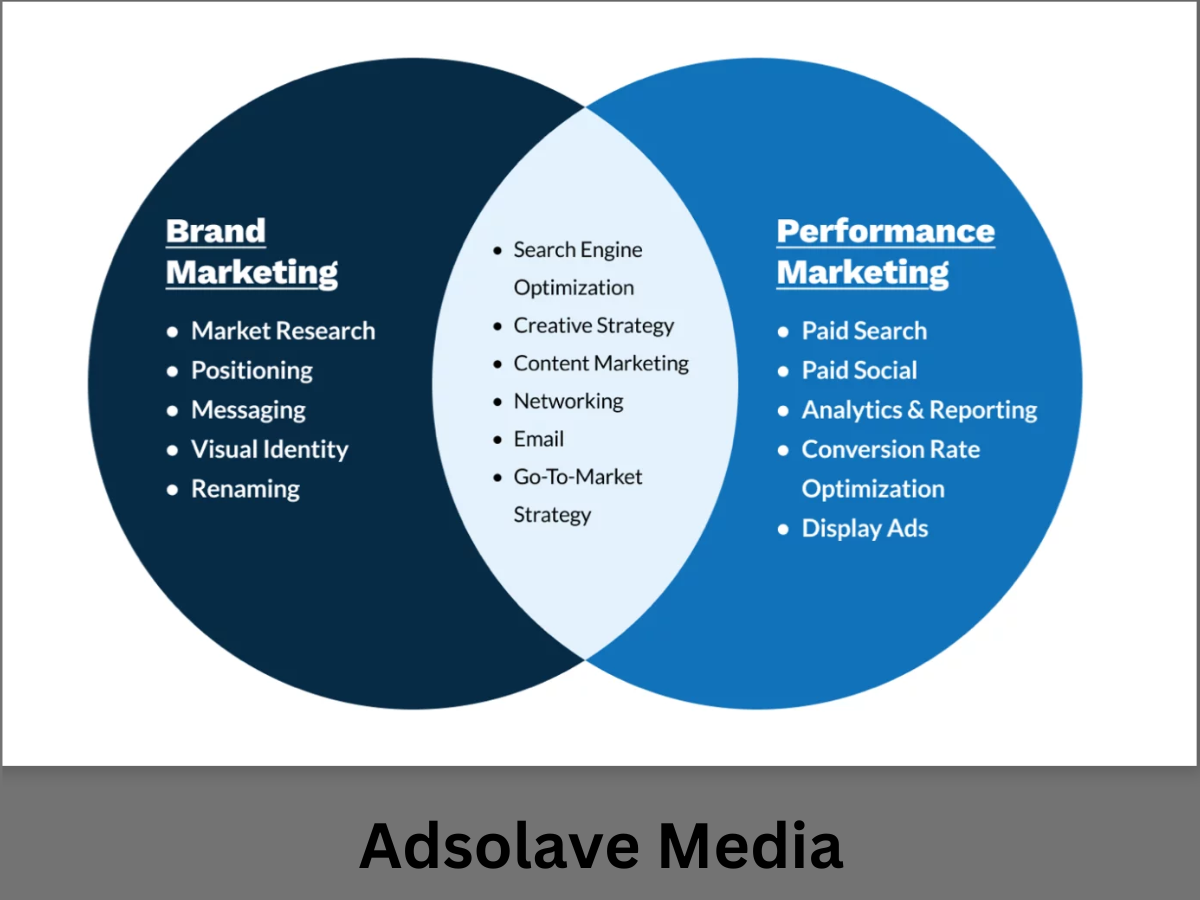
Content marketing is the perfect intersection of branding and performance marketing. By creating high-quality, valuable content, you can:
- Establish authority and trust (branding).
- Drive organic traffic and conversions (performance marketing).
Consider investing in blog posts, video content, case studies, and thought leadership articles to enhance both brand credibility and measurable results.
5. Implement Retargeting with a Branding Focus
Retargeting is a powerful tool to convert users who have already engaged with your brand. However, instead of just pushing discounts and offers, integrate branding elements like:
- Customer testimonials and success stories.
- Behind-the-scenes content to build transparency.
- Brand storytelling to create an emotional connection.
6. Monitor and Adjust Based on Data
Tracking and analyzing performance metrics helps refine both branding and performance marketing strategies. Key metrics to monitor include:
- Brand awareness and recall (branding).
- Conversion rates and ROI (performance marketing).
- Customer lifetime value (a blend of both).
Adsolave Media excels at leveraging advanced analytics to optimize campaigns, ensuring businesses achieve sustainable growth through a balanced approach.
Real-World Success: How Adsolave Media Helps Brands Strike the Right Balance
Case Study: E-commerce Brand Transformation A fast-growing e-commerce brand partnered with Adsolave Media to scale its revenue while building long-term brand equity. Here’s how they achieved success:
- Rebranding: Revamped the brand’s visual identity and messaging to align with customer preferences.
- Content-Driven Strategy: Developed educational blog posts and engaging social media content to establish credibility.
- Performance-Optimized Ads: Launched high-converting ad campaigns while maintaining brand consistency.
- Retargeting & Email Marketing: Personalized follow-ups to enhance customer retention and loyalty.
Results: A 40% increase in customer retention, 25% lower CPA, and a 3x improvement in brand recall within six months.
Final Thoughts: The Future of Branding and Performance Marketing
The marketing landscape is evolving, and businesses must embrace an integrated approach to stay ahead. Rather than choosing between branding and performance marketing, the key lies in balancing both for sustainable success. With expert partners like Adsolave Media, brands can craft strategic roadmaps that maximize growth while building a loyal customer base.
Are you ready to unlock the full potential of your brand? Contact Adsolave Media today and take the first step toward a powerful, balanced marketing strategy that delivers results!